
Ever finish a novel and immediately forget the character’s name, the plot twist, or why you loved it in the first place?
The frustration I feel when I can’t remember what I read is huge… especially since I’m an English teacher. It happens every time I don’t annotate (at least a little bit).
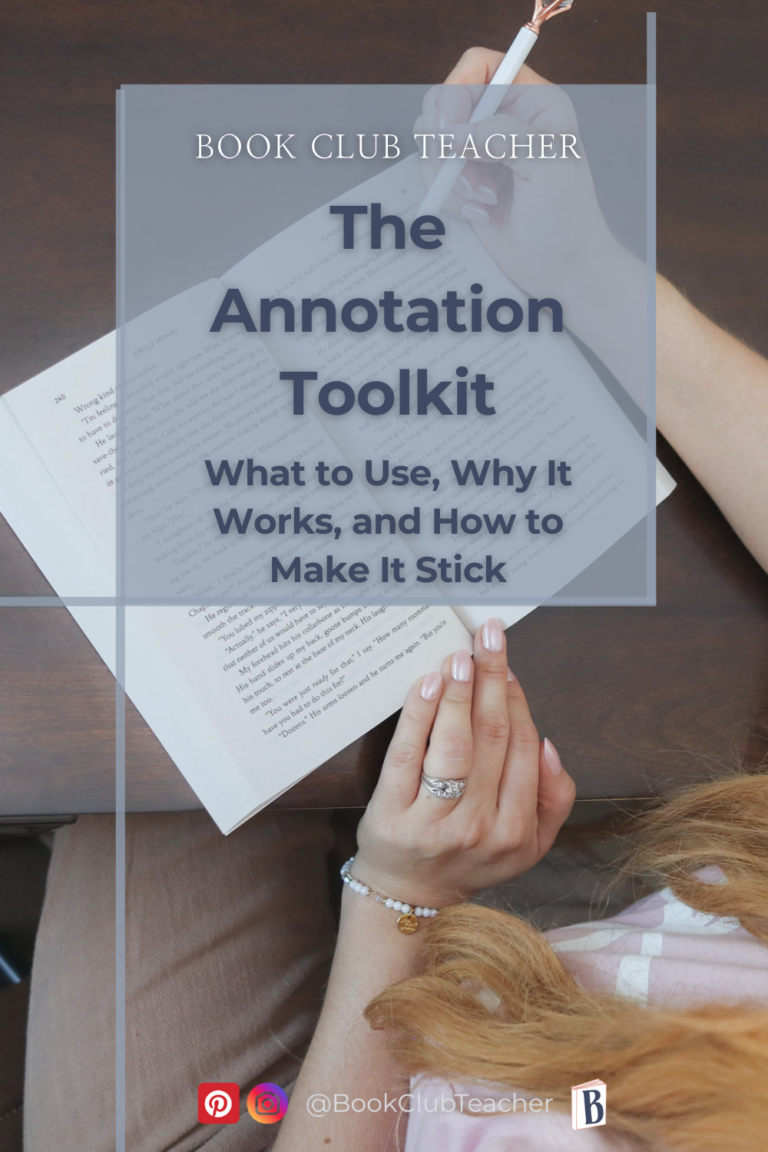
Annotation isn’t just for English class — it’s your secret weapon to remember what you read, engage with the story, and make book club discussions 1000x less awkward.
Here’s the ultimate guide to how to annotate a work of fiction, organized into beginner, intermediate, and advanced levels — so you can start where you’re comfortable and build from there.
Wanting even more info on how to annotate and remember what you read? Catch part 2, part 3, and part 4 of my series on annotations.
Want a quick (free) overview of annotating, and a printable, bookmark-style annotation cheat sheet?

Beginner
The Easy Wins for New Annotators
If you’ve never annotated before (or you’re just getting back into reading), start with these simple, high-impact categories:
Key Quotes
What to mark: Lines that made you pause, laugh, cry, or scream internally.
Why it helps you remember: Revisiting powerful lines locks in the emotional punch of the book.
How to spot it: If you wish you could post it on Instagram or embroider it on a pillow — highlight it.
Example: “Not all those who wander are lost.” – J.R.R. Tolkien
Themes
What to mark: The big-picture messages or moral takeaways and lessons.
Why it helps you remember: Identifying themes helps you connect the story’s details to a bigger idea.
How to spot it: Look for repeated ideas, life lessons, or philosophical moments.
Example: “Found family” in Six of Crows.
Emotional Reactions
What to mark: Your in-the-moment feelings (joy, rage, heartbreak, swooning) whatever you’re feeling!
Why it helps you remember: You’ll recall not just the plot, but how it made you feel. When we attach feelings to plot, it becomes “sticky.”
How to spot it: If you physically react (laugh, gasp, cringe), jot it down.
Example: “OMG” scrawled next to the Red Wedding in Game of Thrones: A Storm of Swords.
Intermediate
For readers who want a little more depth
Once you’re comfortable, add these layers to your annotation habit to make connections and spot patterns.
Character Development
What to mark: First impressions and how characters change over time.
Why it helps you remember: Tracking growth makes plot twists and endings hit harder.
How to spot it: Note when a character changes their values, alliances, or opinions.
Example: Elizabeth Bennet’s shifting opinion of Mr. Darcy in Pride and Prejudice.
Turning Points
What to mark: Major events or decisions that change the story’s direction.
Why it helps you remember: You’ll always recall where the “Oh, no they didn’t” moments happened.
How to spot it: Look for irreversible choices, big reveals, or chapter-ending cliffhangers.
Example: The Red Wedding in Game of Thrones: A Storm of Swords.
Connections
What to mark: Links to other books, movies, songs, or your own life.
Why it helps you remember: Making personal or pop culture connections cements the story in your memory.
How to spot it: If a character reminds you of another character in a story (or your own high school drama) note it.
Example: A character giving a pep talk worthy of Friday Night Lights.
Predictions
What to mark: Your guesses about what might happen next.
Why it helps you remember: You’ll stay engaged as you read and see if you were right.
How to spot it: Anytime you get that “I bet…” feeling.
Example: “These enemies are 100% ending up together.”
Advanced
For Annotation Overachievers (and Lit Nerds)
Ready to annotate like a pro? These advanced categories help you catch hidden details and deepen your analysis.
Motifs
What to mark: Repeated objects, colors, or phrases that hint at a deeper meaning.
Why it helps you remember: They’re often tied to the book’s themes.
How to spot it: If you see it more than twice, it’s probably intentional.
Example: The recurring rose imagery in Beauty and the Beast retellings..
Symbols
What to mark: Objects or images that represent something bigger.
Why it helps you remember: Symbols carry emotional and thematic weight.
How to spot it: If the author describes an object more than once in a meaningful way, it’s probably a symbol.
Example: The mockingjay pin in The Hunger Games.
Setting & World-building Details
What to mark: Rules of the world, location details, or time-specific elements.
Why it helps you remember: Settings shape character behavior and plot possibilities.
How to spot it: Unique rules, maps, weather patterns, social hierarchies.
Example: The role of storms in Fourth Wing.
Foreshadowing & Clues
What to mark: Hints or small details that might pay off later.
Why it helps you remember: When the reveal happens, you’ll remember the breadcrumb trail.
How to spot it: Odd remarks, suspicious absences, or repeated warnings.
Example: The constant references to a storm before the climax.
Narrative Voice & POV Shifts
What to mark: Changes in narrator style, tone, or point of view.
Why it helps you remember: These shifts often signal deeper meaning or twists.
How to spot it: Sudden switches from first person to third, or shifts in mood.
Example: The alternating narrators in The Night Circus.
Annotation Tips to Remember More
- Color Code: Assign a color to each category (e.g., pink = emotional reactions, blue = themes)
- I don’t personally color code, because my poor brain can only hold so much.
- Margin Symbols: Use symbols instead of writing out whole words
- star your favorite quote or important info
- a question mark for questions asked or questions you have
- a heart for parts you love
- not much of an artist? abbreviations work (I frequently scribble “wtf” and “lol” in margins)
- Sticky Tabs: Flag major moments or important character details so you can flip back instantly.
- I don’t use sticky tabs as I read, but I sometimes will go back and add them when I’m done reading and I’m starting to review my annotations, either for a class discussion of the material or a book club discussion.
- Don’t Overdo It: Pick 3-4 things to annotate for when you’re just starting out. Annotating should feel like part of the story, not homework.
- I typically do: character details, main plot points (mostly conflicts), and things I notice are repeated (aka motifs)
My annotations
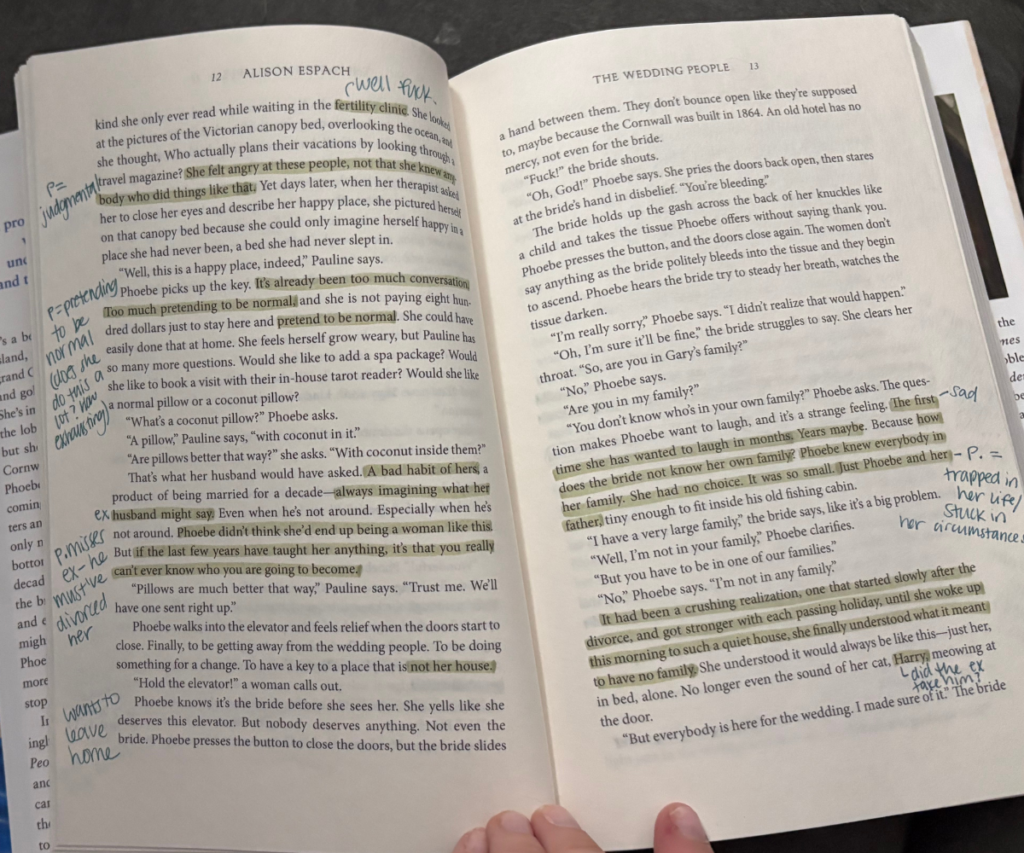
I will try to take some pictures as I annotate my current read (grab it here – The Wedding People, by Alison Espach).
I typically annotate like this example… just a pen, a highlighter, and my random thoughts ready to splash out on the page.
Free Printable: “Fiction Annotation Quick Guide Bookmark”
Want an easy bookmark-style reference? Grab my free Fiction Annotation Quick Guide Bookmark so you can remember what you read without flipping through a giant blog post mid-book.