
Ok, so you’ve made it to part 4 of my “using annotations” series. Or maybe you just clicked here from my Pinterest page? Here are part 1, part 2, and part 3 if you’re curious. Or…
Want a quick (free) overview of annotating, and a printable, bookmark-style annotation cheat sheet?

Either way, this annotation series has been a long labor of love. I see this series as my love letter to annotations, which I happen to be passionate about… if you can’t tell by the fact that I now have FOUR blog posts about using them.
But maybe you’re not head over heels in love with annotations yet?
Do annotations feel more like a chore or homework than the key to rocking discussions with students or at book club?
Do you feel like you’re scribbling in the margins but getting nowhere when it comes to actually using your annotations?
Annotations don’t have to be boring, tedious, or useless. They are where you can shake things up, personalize your reading experience, and fall back in love with reading!
The following are my suggestions on making annotations less bleh.
Get Creative with Annotation Challenges:
Sometimes your brain just needs a playful prompt or exciting idea to make annotating fun again.
Try these low-pressure annotation challenge ideas:
- Mood-based color coding – Use colors to reflect the mood of a passage (pink for romance, yellow for funny, blue for sadness).
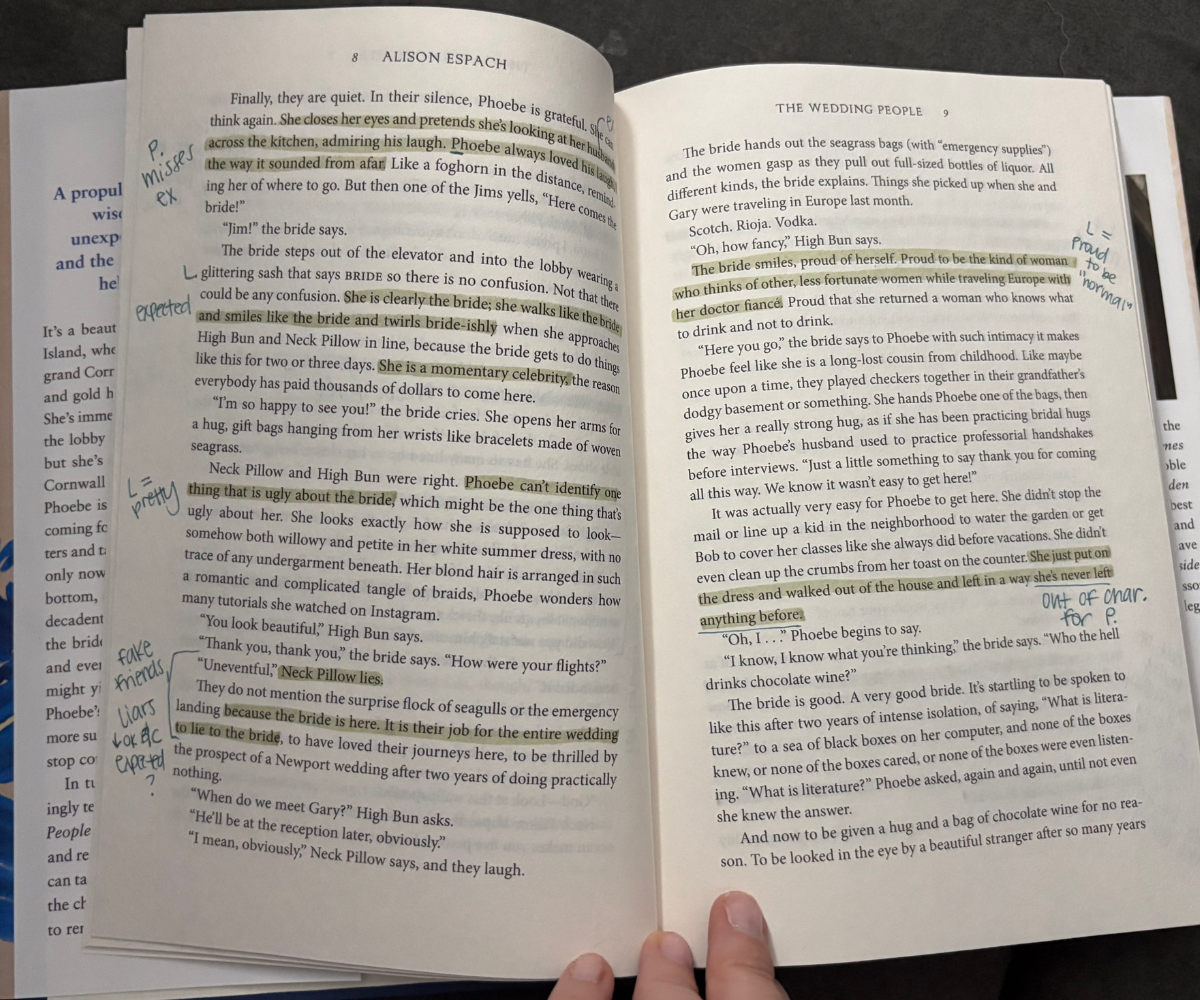
- NOTE: I tried this method out with four recent reads (Gild, Funny Story, The Wedding People, and a Fourth Wing reread), and I realized that using emotion reactions in fantasy novels doesn’t work for me. Just writing “lol” or “sad” in the margins is enough for me because I don’t often feel the need to track my emotional attachment to fantasy characters.
- NOTE: I tried this method out with four recent reads (Gild, Funny Story, The Wedding People, and a Fourth Wing reread), and I realized that using emotion reactions in fantasy novels doesn’t work for me. Just writing “lol” or “sad” in the margins is enough for me because I don’t often feel the need to track my emotional attachment to fantasy characters.
- Chapter Summaries:
- Emojis: try recapping each chapter’s vibe with one single emoji (and NO repeats, as you continue to read)
- One Word: try to recap each chapter with one word (again, no repeats)
- Six Words: recap each chapter in 6 words (no more, no less) for a fun, creative challenge
- Conversation with the author – Write margin notes as though you’re speaking directly to the author. (“Why would you take away my favorite character?”… looking at YOU, Rebecca Yarros)
- Doodle-only annotations – Instead of words, annotate with arrows, symbols, or quick sketches. It doesn’t have to be artistic or pretty to be effective.
- Gut reactions and predictions – Record your first impressions or plot predictions, then revisit them later. This makes it easy to track how your perspective changes and pinpoint where plot twists became clear.
Do you have any other annotation challenge ideas? I’m curious! Let me know in the comments below.
Avoiding Annotation Ailments:
Even the best intentions can cause a lot of mental anguish when it comes to annotations. Here are the most common traps—and what to do instead:
| Common Pitfall: | Avoiding the Error: |
| Over-annotating so reading now feels like homework | Limit yourself to 1–2 notes per chapter, emotion, theme, etc. Focus on what truly matters instead of turning reading into a scavenger hunt. |
| “Highlight-everything” so now I’m overwhelmed because nothing is important | Be selective. Pick one color for big ideas and another for favorite quotes. If everything’s neon, nothing stands out. |
| Annotating and never revisiting them | Schedule a “note review” within 48 hours of finishing your large reading session or finishing the whole book. Bonus points: pair it with your reading ritual (coffee, wine, water—choose your favorite reading liquid). |
| Losing your notes | If physical notes are getting lost, either rip them out of your notebook and affix them at the start or end of your book, or make sure they aren’t just stuck on the front of your book. Take quick screenshots of digital notes or back them up in Goodreads, Notion, or your e-reader app. |
| Reading doesn’t flow and annotating feels like a huge roadblock to getting through a book | Try batching: read a full scene/chapter first, then go back to mark it up. This helps to keep the story immersive, while still giving you space for reflection. |
These are common stumbling blocks I’ve come across, students have mentioned, or friends have talked to me about. Are there any other annotation issues you’ve had and need help with? Let me know and I’ll work my literary magic!
Make Annotation Part of Your Life
The trick to using annotations in your long-term reading “plan” is weaving them into the reading routines you already love. Here are some simple ways to make this happen:
- Pair with rituals – Review your annotations during a weekly reading ritual, like Sunday morning coffee with your book notes, or over lunch on the day before book club to refresh your memory.
- Set annotation goals – Choose one or two focuses per book, such as tracking a character’s growth or collecting quotes on resilience. Annotating everything is so overwhelming (speaking from experience), but the only way to figure out what is important to you is to try annotating many different things, seeing what works for you, and going with that.
- Try annotation swaps – Share your marked-up copy with a friend, or annotate side by side in a buddy read. Seeing how others read can be eye-opening. It is also how I found my favorite annotating tools, like these clear post-it notes (cheaper than the post-it brand and I think they stick better) and this neutral colored Zebra Midliner highlighters/Sarasa gel pen set that a student uses every day in my class.
- Habit stacking – Pair annotation with something you already do—like journaling at night or updating your TBR.
- Set a review day – Once a month, flip through your past annotations to keep your reading memories fresh.
What does this actually look like?
Annotations are Personal
This means that annotations for me will possibly (probably) look different than yours… and that’s ok! My real life is busy, chaotic, hectic, and different from day-to-day. I have to have a simple, no thoughts required annotation method, or else I get lazy and don’t do it. I then regret it when I go to book club or pick up my novel for a class discussion and I can’t find what I read and wanted to point out to people.
Final Thoughts
Using annotations isn’t about perfection, aesthetics, or being “good at” annotating. It’s about experimenting to find your personal preference, noticing what works for you, and creating a reading habit you’ll actually remember and find useful. Whether you’re doodling emojis, swapping books with friends, or simply highlighting the quotes that make your heart race—you’re turning reading into an experience that lasts.